

Electricity self-consumption with photovoltaic solar panels
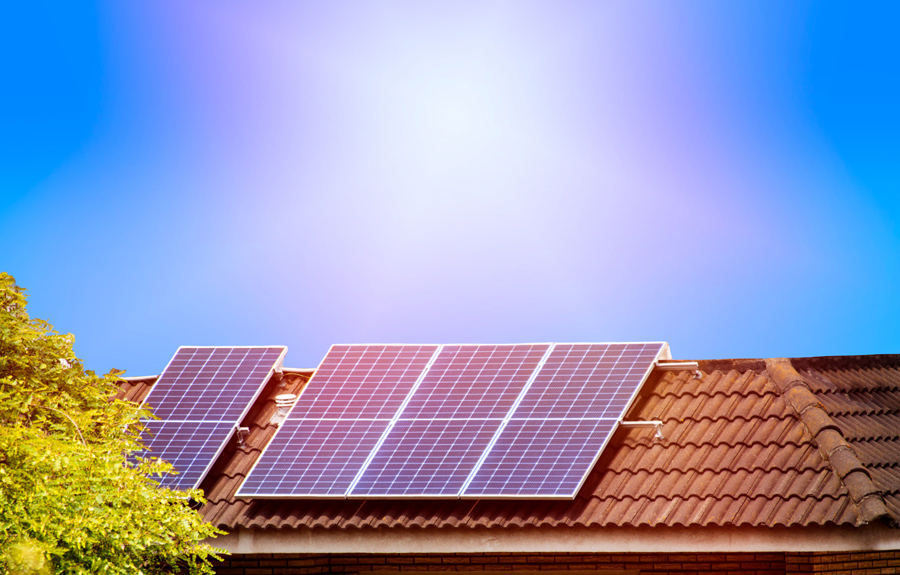
Self-consumption entails generating power for own use using solar panels installed in homes, companies or communities. In this way, sunlight can be harnessed to produce electricity, reducing grid dependence and cutting energy bills.
There are several key elements in a photovoltaic self-consumption system that enable the solar power to be transformed into electricity. The most important are the photovoltaic solar panels themselves, which turn solar radiation into direct current. Depending on the manufacturer and the technology used, they have a nominal capacity of around 550 W per unit. A typical domestic installation might have a capacity of between 3 and 10 kW — enough to cover a major part of a household’s annual electricity consumption.
The current generated by the panels is sent to an inverter, which converts the DC (direct current) output to grid-compatible AC (alternating current). It is also possible to install a bidirectional meter that measures both the energy consumed from the grid and the surplus energy exported back into it when the installation is operating in feed-in mode. Users can opt for simplified compensation, where the value of the surplus is deducted from the monthly bill, or direct sale to market, which is more complex and subject to specific taxation.
To improve efficiency and energy autonomy, users can add storage batteries. These allow the energy generated during sunlight hours to be stored for use at times of low output (e.g. at night or on overcast days). Battery capacity is sized according to the user’s consumption profile. By adding batteries, it is also possible to operate in self-consumption mode without a surplus.
The installations have monitoring systems with a real-time read-out of output, consumption and battery charge status, to help optimise energy and economic efficiency.
Changes in the law have helped incentivise self-consumption. Royal Decree 244/2019 and its subsequent amendments, regulates the technical and economic conditions of individual and collective self-consumption.
The key points are as follows:
- • Modes: self-consumption without surplus (with a device to prevent surplus energy being fed into the grid) and self-consumption with surplus (compensation or sale to market).
- • Simplified Compensation: for installations with surpluses of up to 100 kW. Any energy fed into the grid is deducted from the bill.
- • Collective self-consumption: enables several consumers to share and consume from a single facility. The energy generated is distributed among all self-consumers.
- • Exemption from access fees and charges: for self-consumed renewables.
- • Administrative log: telematic and free of charge for monitoring and control.
This regulation encourages distributed generation, incentivises shared self-consumption, allows for the creation of energy communities (where active consumers can generate and consume their own energy and exchange unused surpluses with other members of the community), simplifies procedures and promotes the energy transition towards a decarbonised economy.
Among the main advantages are the economic savings, reduced emissions, access to public subsidies and greater energy independence. In addition, the use of batteries can further optimise the efficiency of the self-consumption facilities.
Photovoltaic self-consumption has proved to be an efficient, legal and affordable arrangement for moving towards a more sustainable energy model.


