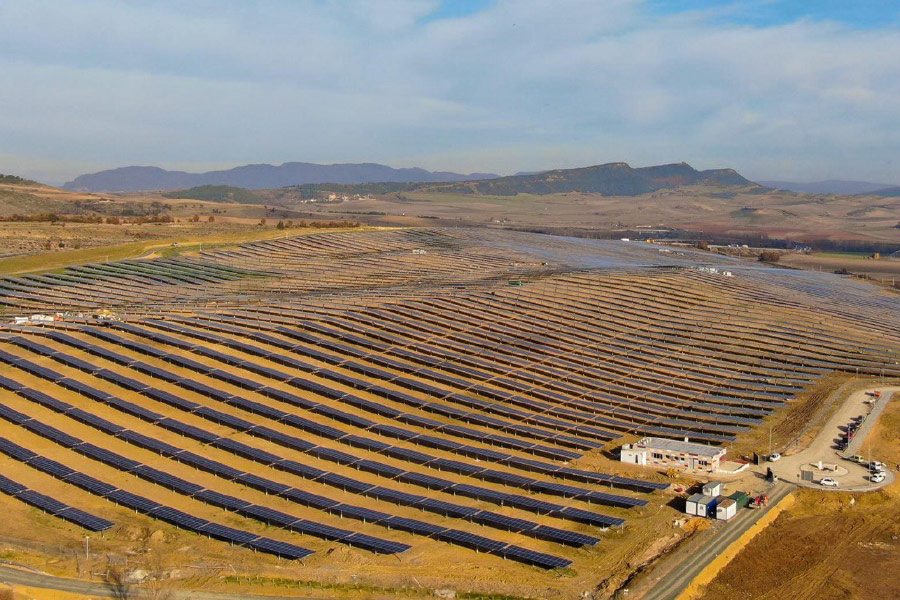
We are committed to Energy Autonomy
Energy autonomy is a strategic necessity for Europe and the Basque Country in the face of the new geopolitical reality.
In the Basque Country, we must make progress in energy autonomy through the development of our own renewable electricity generation capacity.
In the year 2024, indigenous renewable electricity production in the Basque Country accounted for 7.9% of the total electricity consumption of our autonomous community. The European average in the same year reached 46.9 per cent.
Every gesture counts: from self-consumption to major developments
We need to make progress in the development of wind and photovoltaic electricity generation capacity at all levels. Every gesture counts and is necessary.
Starting with self-consumption, in the last 5 years we have increased the installed power by 186 MW, going from 7 MW in 2020 to 193 MW in 2025. This trend will help us reach European levels of self-consumption by 2030.
We also need to make a clear commitment to major wind and photovoltaic developments. The last wind power plant was set up more than 20 years ago (Badaia Wind Farm) and the last large photovoltaic plant 6 years ago (Ekian Photovoltaic Farm).
The Basque Government, through the EVE, is going to make a bet on large photovoltaic and wind developments by co-investing 80 M€ until 2030 with the objective of adding 450 MW for wind and photovoltaic electricity generation. This, together with the planned increase of 300 MW of self-consumption until 2030, will mean doubling this own electricity generation by improving the ratio from 7.9% to 15%.
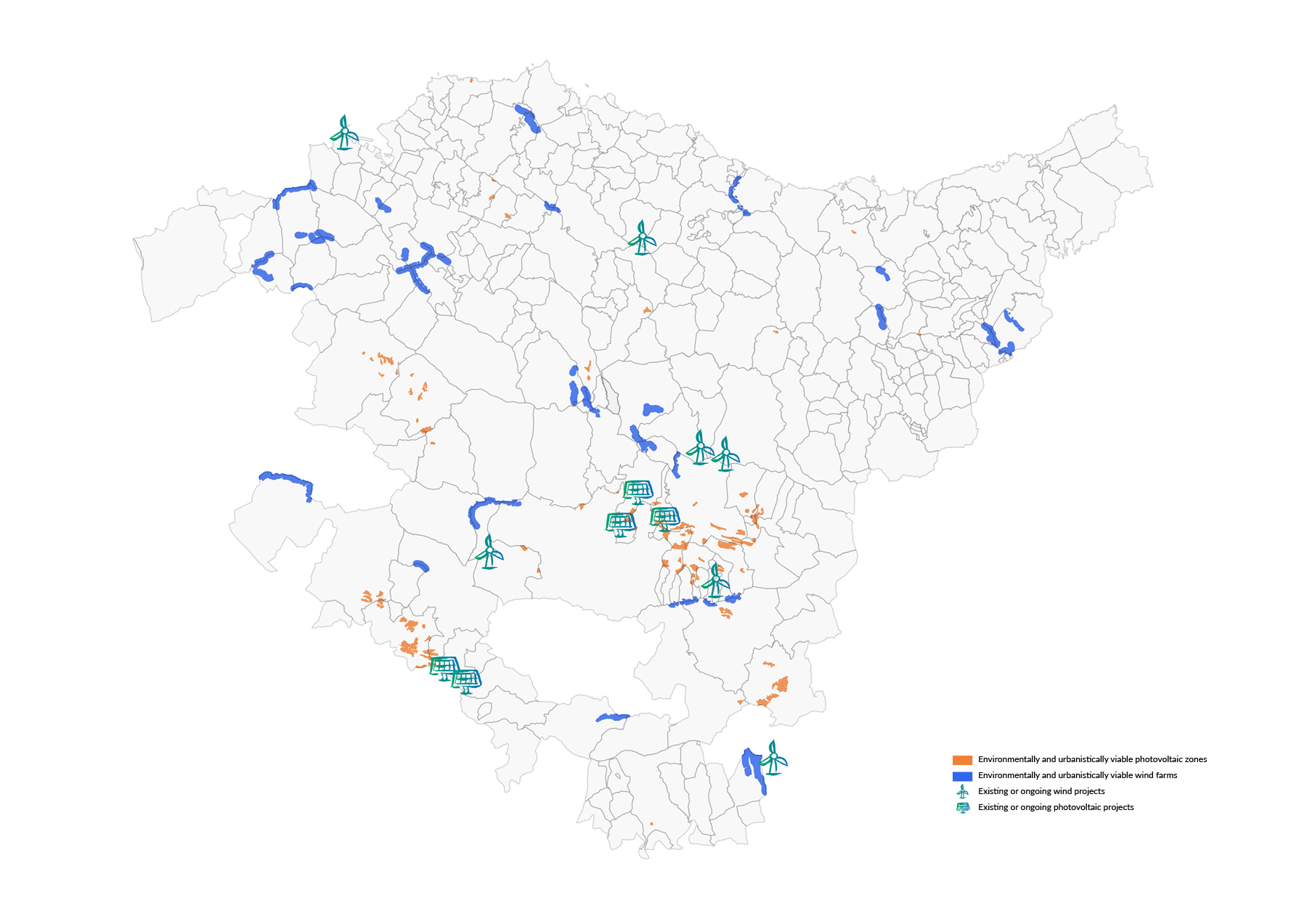
Zones defined according to the criteria of the PTS Renewable Energies, PTP Álava – Araba Central and PGOU Vitoria-Gasteiz.
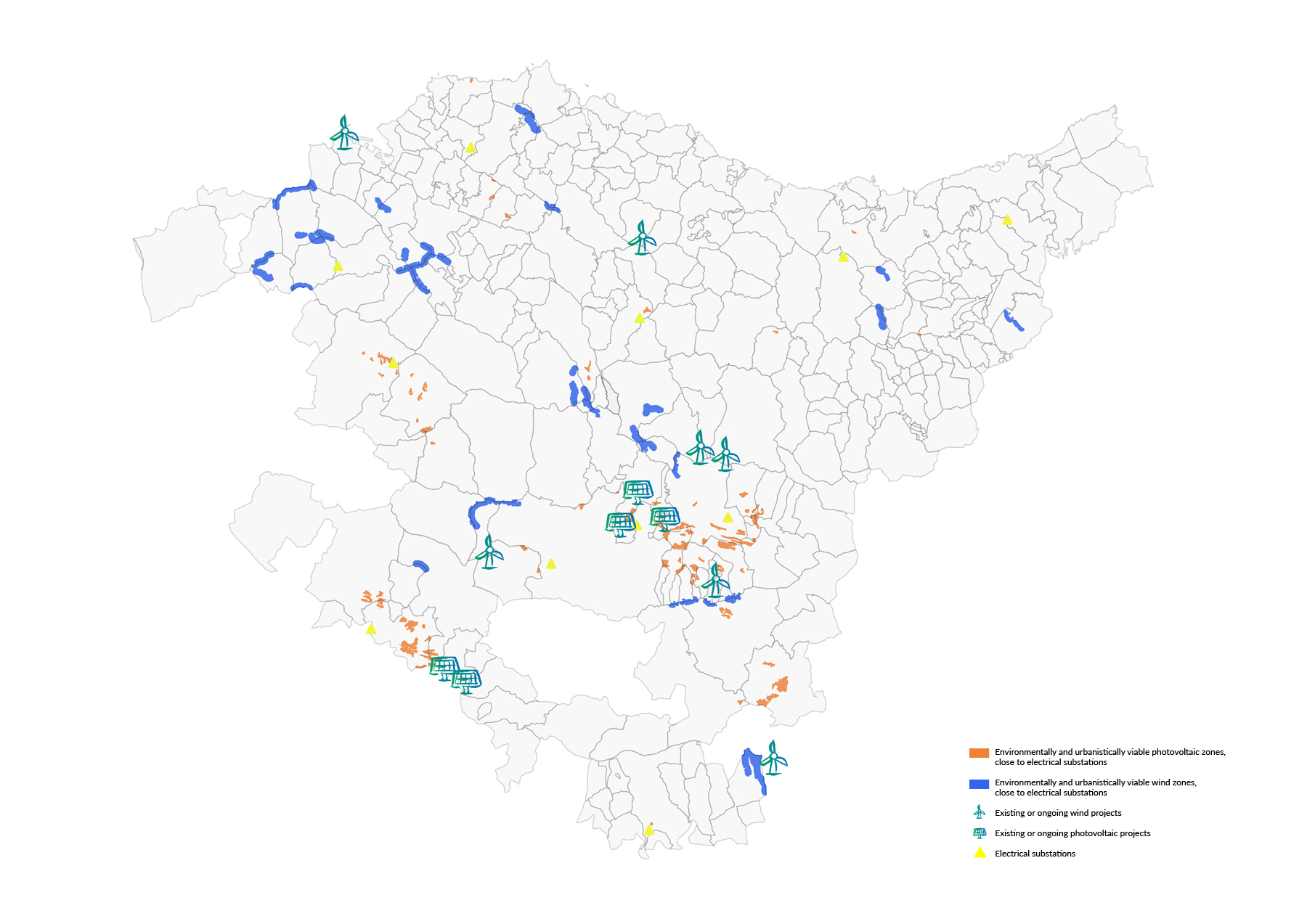
Distancia generación-subestación  15 km.
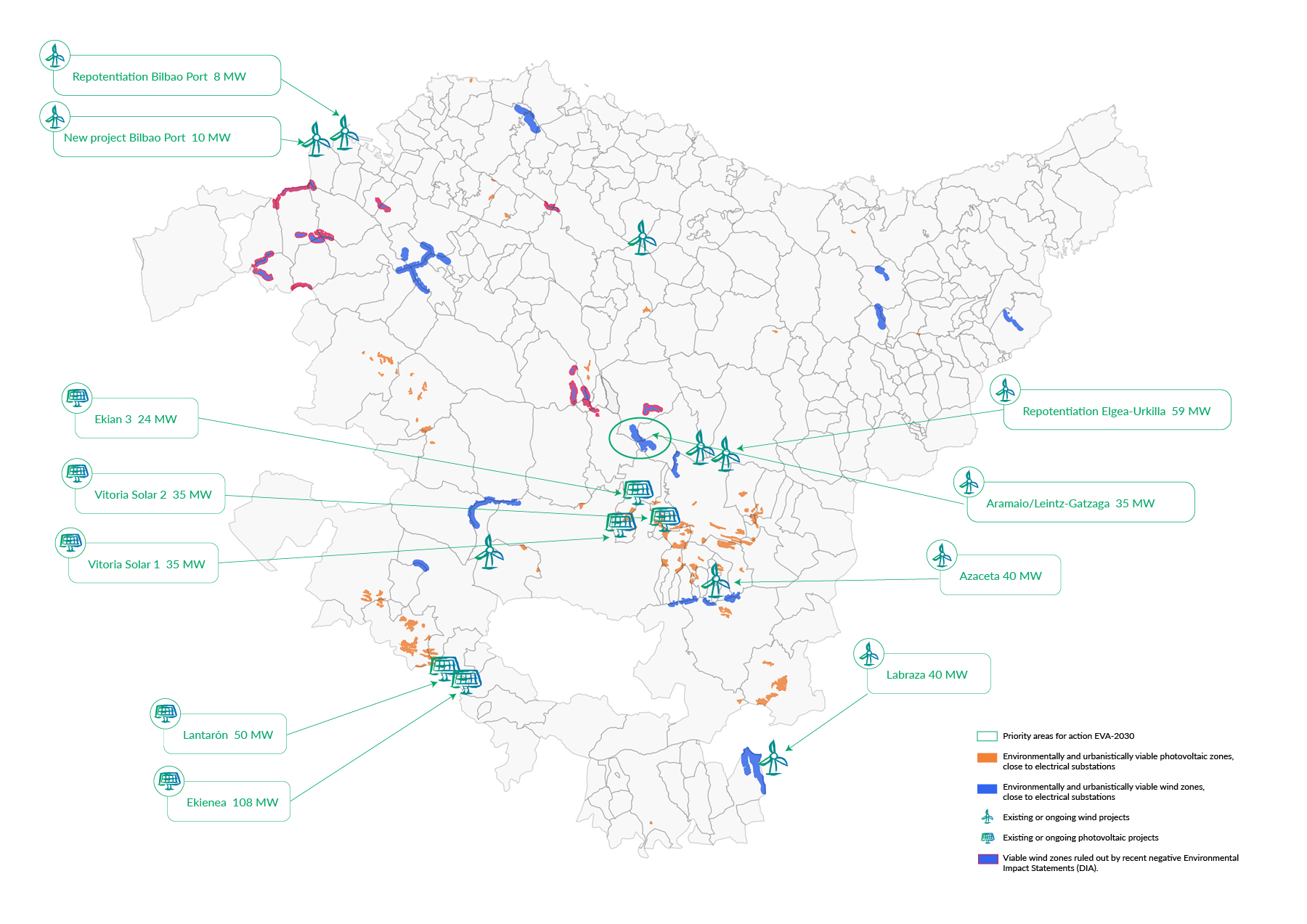
Model EVE: How do we choose the best locations?
To select the best locations for the development of large photovoltaic and wind installations, we apply the EVE Model in this order:
- Areas where there is sufficient resource, sun or wind.
- Viable areas from both an environmental and an urban perspective.
- Areas that are less than 15 km from an electrical substation.
- The costs of the project must be commercially viable.
From all of the above, the priority areas of action of the EVE until 2030 identified for the development of large wind and photovoltaic generation facilities are born.
Currently, we are already developing two large projects: the Labraza Wind Farm (40 MW) and the Ekienea photovoltaic plant (108 MW).
Public-private partnership
From the EVE, through public-private collaboration, we will co-develop wind farms and photovoltaic plants with industrial partners of proven track record.
The EVE will accelerate its line of work with potential industrial partners for the development of the projects identified in the priority areas of action until 2030.
The study of the new projects in the priority areas of action will be carried out by working with all the competent administrations.
Local impact in the priority areas of action of the EVE
The commitment of EVE is that these projects will bring concrete benefits to local communities.
As an example, in the wind farm of Labraza, the citizenship of the environment will have two very clear advantages. On the one hand, a reduction in the electricity bill. And, on the other hand, the possibility of participating in the project with small monetary contributions (crowdlending), so that they obtain an economic benefit.
All this, in addition to the income from taxes, fees or royalties that the municipalities will obtain.