

Hydropower harnesses the force of moving water to generate electricity, using turbines connected to alternators. The basic principle has been utilised since ancient times, and it is still one of the most reliable and efficient of all renewable technologies.
In a hydroelectric power plant, water is stored in reservoirs or channelled from rivers to drive turbines. The kinetic energy of the flow is transformed into mechanical energy and finally into electricity. No pollutants or greenhouse gases are emitted in the process and hydro power can be used to enhance the stability of the electricity system.
The three main types of hydroelectric power plants are run-of-river, reservoir (dammed) and pumped-storage. Run-of-river plants use the natural flow of the river without requiring large reservoirs. In conventional reservoir plants, the water is retained in a large reservoir and released as required. Pumped-storage plants have two reservoirs at different elevations; energy is stored by pumping the water to the upper one at times of low demand.
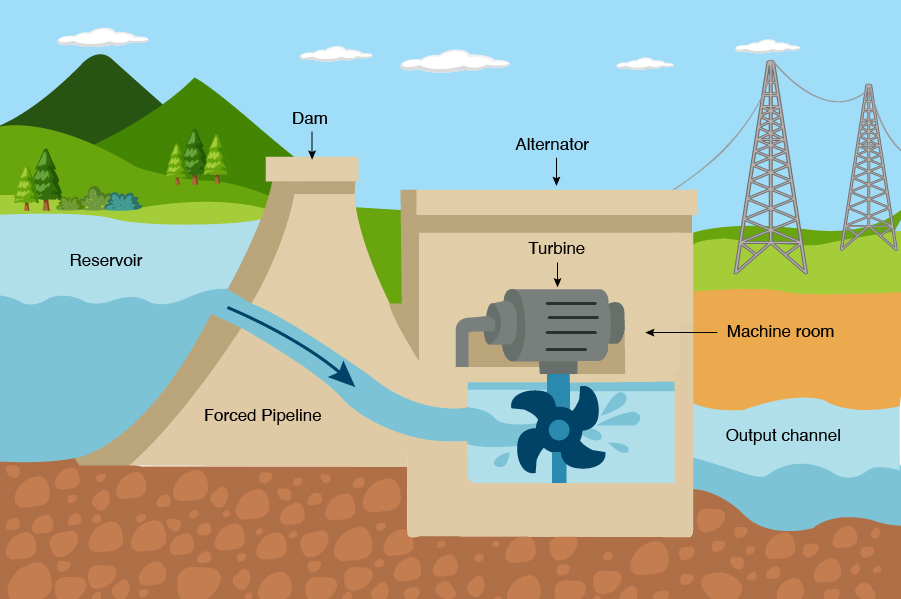
Depending on the head (height difference) and water flow, different types of turbines are used:
- • Pelton: for high hydraulic heads with low flow rates.
- • Francis: versatile, suitable for intermediate flow rates and heads.
- • Kaplan: designed for high rates of flow and low heads
The benefits of hydro power include:
- • High reliability and regulation capacity.
- • Long service life of facilities.
- • Continuous, stable production, even under variable conditions.
- • Possibility of energy storage using pumped-storage power plants, which act as ‘natural batteries’ to accumulate surplus energy from other renewable sources, such as solar or wind.
Thanks to these characteristics, hydropower not only produces electricity, but is also playing a key role in the transition to a cleaner and more secure energy system, integrating with emerging technologies to ensure supply and grid flexibility.


